Tech Leads and Engineering Managers: Code Mornings, Meetings Afternoons
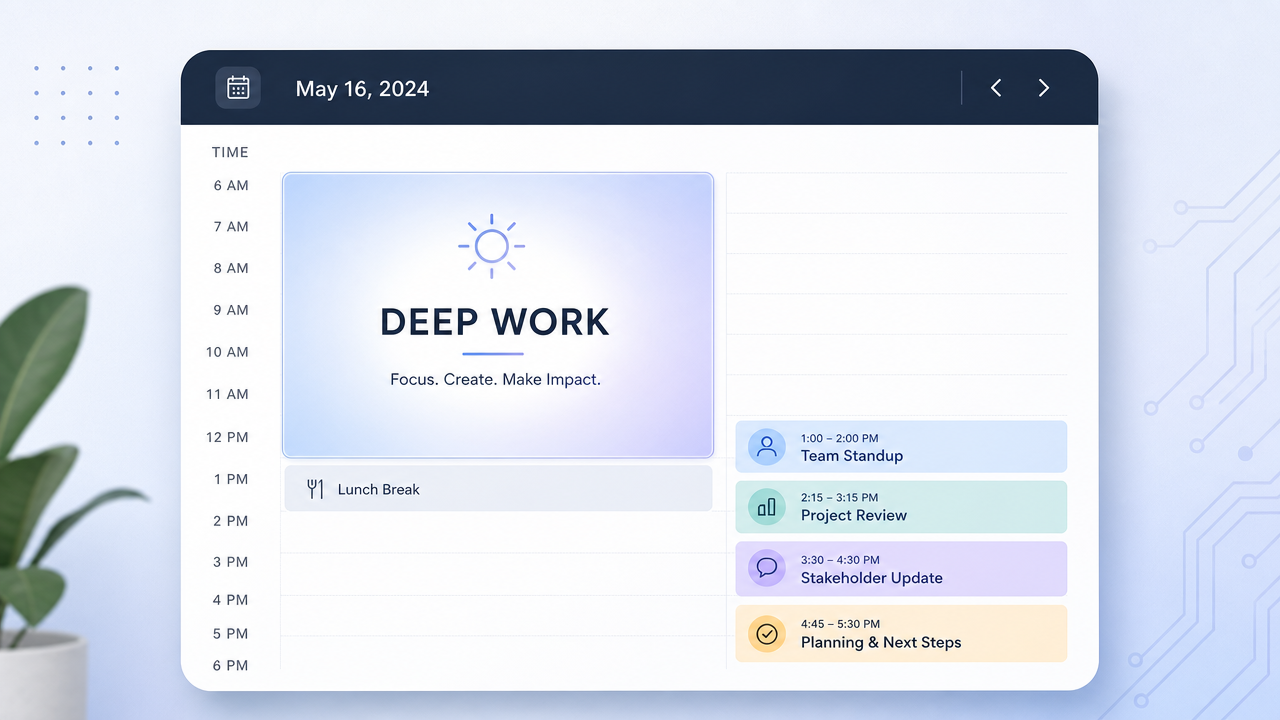
You can run both roles in one day, with structure
Many tech leads and engineering managers need to do both jobs every day. The problem starts when deep work gets pushed into random gaps between calls. By late afternoon, they feel behind on strategy and behind on technical depth.
This is not usually a discipline problem. It is a schedule design problem.
Strategy work and build work demand different mental states. Strategy needs broad context, quick decisions, and lots of communication. Build work needs long focus, enough time to load deep technical context, and uninterrupted execution.
A mixed day model solves this by separating those modes by time of day.
What mixed day structure means
Mixed day structure is simple:
- morning: one large protected maker block
- afternoon: shorter meeting and strategy slots
In morning block, you do coding, design spikes, incident hardening, and high risk reviews. In afternoon, you batch one on ones, stakeholder syncs, decisions, and communication.
Goal is not perfection. Goal is reducing mode switching enough that both responsibilities get real attention.
Why this mixed pattern works
This pattern works because you align cognitive load with energy curve. Most people have strongest focus in first part of day, then better social and coordination energy later.
Mixed days are not the problem. The problem is unprotected mixed days with constant interruptions. When your schedule has clear boundaries, context switching drops.
A good mixed day improves three things:
-
Decision quality
Strategy conversations get your full executive attention, not leftover attention between pull requests. -
Technical output quality
Build tasks get enough uninterrupted time to produce meaningful artifacts, not partial starts. -
Team predictability
People know when to expect fast responses and when to expect async responses.
Hidden win is lower stress. You end morning with real technical progress, then finish day with decisions and communication closed.
Daily template you can copy
There is no universal template, but this one works in many teams:
- 08:00 to 12:00: maker block
- 12:00 to 12:30: lunch break
- 12:30 to 17:30: meetings in thirty minute slots
- 17:30 to 18:00: close loops and plan next day maker target
If your org starts meetings earlier, shift maker block earlier. If your energy peak is later, move block accordingly.
What matters is consistency and clear boundaries, not exact clock times.
Calendar blocking rules that make it stick
Key condition is calendar protection. If maker block is not blocked and defended like important meeting, mixed days degrade into reactive support.
Use these rules:
- book maker block as recurring event
- mark it busy, not optional focus
- reject non critical meetings in that window
- route urgent issues through explicit escalation path
- avoid opening chat during first ninety minutes
What belongs in morning maker block
Morning block is for work that needs deep technical context:
- deep coding on current priority
- architecture spike with code proof
- high blast radius pull request review
- production bug analysis and fixes
- reliability and test hardening
Before block starts, define one primary artifact you want by noon.
Examples: merged migration plan, completed feature slice, or reviewed risky change set.
What belongs in afternoon meeting slots
Afternoon slots are for coordination and leadership work:
- one on ones and feedback conversations
- roadmap and scope decisions
- stakeholder updates
- dependency negotiation with other teams
- hiring loops and debriefs
Keep slots short, often thirty minutes, with strict agendas and clear decisions.
If topic needs deep technical analysis, park it for next morning block.
How to measure if it is working
Use simple signals for four weeks:
- number of uninterrupted maker blocks completed
- number of high quality technical artifacts shipped
- cycle time for important decisions
- after hours work trend
- your weekly stress level from one to five
If maker blocks rise but decision cycle time breaks, you leaned too far toward build mode.
If meetings are smooth but technical artifacts drop, you leaned too far toward strategy mode.
Tune ratio until both outputs stay healthy.
A realistic rollout plan
Do not force big change in one week. Run a small experiment:
- block one recurring morning maker window for next week
- announce rules to team and manager
- protect at least one two to three hour block each workday
- track outcomes for two weeks
- expand if signal is positive
Small experiment lowers social friction and gives evidence before full adoption.
Final thought
You do not need to choose between being useful in leadership and useful in code. You need a daily shape that respects both kinds of work, and you need to protect it on calendar.
Next week, protect one serious morning maker block, then move meetings into smaller afternoon slots. Run it for two weeks and watch if technical output and decision quality both improve.